Bedding · Sleep environment
What Makes a Naturepedic Waterproof Protector Breathable?
A waterproof mattress protector has two jobs that can seem at odds: keep liquid away from the mattress and remain comfortable beneath the sheet. The answer lies in its layers, the behavior of its barrier, and the small details of how it fits and is cared for.
Published October 23, 2026
A glass tips in the nightstand’s dim light. A child spills water. A pet arrives from the rain and settles on the bed. In each case, the mattress protector is an unobtrusive line of defense: a layer designed to keep moisture from reaching the mattress beneath it. Yet a barrier that blocks liquid does not have to feel like a sheet of plastic. The materials on either side of that barrier, its thickness, and the way the layers are assembled all shape the experience of sleeping above it.
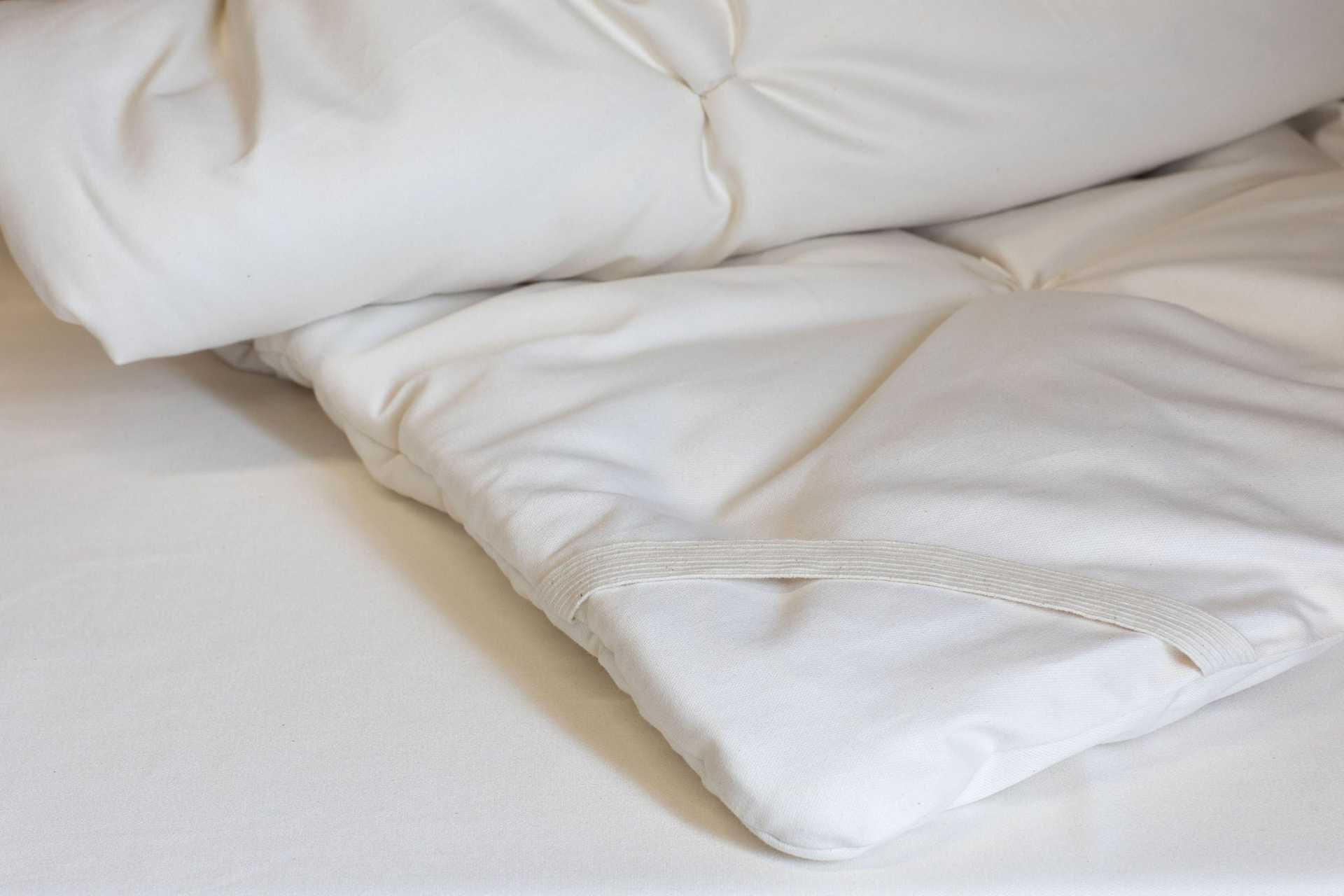
Naturepedic’s waterproof mattress protector is described as two layers of organic cotton jersey with a thin waterproof membrane between them. That construction offers a useful example of how bedding can combine a soft textile surface with a functional moisture barrier. Understanding the distinction between blocking liquid and allowing some water vapor to pass helps explain what “breathable” can mean—and what it does not promise.
Waterproof and breathable are not opposites
Waterproofing is about preventing liquid water from passing through a material under ordinary conditions of use. Breathability, in bedding descriptions, generally refers to the capacity of a material or layered construction to allow heat and water vapor to move away from the sleep surface to some degree. They describe different kinds of movement. A membrane may resist droplets while allowing some vapor to pass through its structure.
This distinction is easier to picture at the scale of a night’s sleep. The body releases heat and moisture, and the air around the bed holds some of that moisture as vapor. If the bedding traps too much warmth or dampness close to the skin, a sleeper may feel clammy or overheated. A protector’s surface, barrier, fitted sheet, room temperature, and the sleeper’s own physiology all influence that experience. No single layer controls the entire sleep climate.
Breathable does not mean air flows freely through the protector, nor does it mean the material cools every sleeper. A waterproof layer remains a barrier by design. The practical question is how that barrier works alongside the textile layers and the rest of the bed—and whether the complete setup feels comfortable to the person using it.
The role of cotton layers
In the Naturepedic design described here, organic cotton jersey forms the outer faces of the protector. Jersey is a knitted fabric, known for its flexibility and soft hand. In a fitted protector, that stretch can help the fabric lie smoothly over the mattress rather than feeling stiff or tightly woven. Cotton also has a familiar, textile feel against the sheet and can take up some moisture at the surface.
The cotton layers are not the waterproof component. Instead, they surround the thin membrane, creating a fabric-covered construction rather than leaving the barrier as the only material between the sleeper and the bed. This matters because comfort is shaped by the full stack of materials: the sheet, the protector’s top face, the membrane, the lower fabric, and the mattress itself.
Organic certification speaks to defined standards for how a material is produced and processed; it does not, by itself, tell a sleeper how cool or soft a fabric will feel. Similarly, cotton’s presence does not guarantee that every person will experience the protector as breathable. The weave or knit, fabric weight, membrane, fit, laundering, and bedroom conditions all have a part to play.
A thin membrane, carefully placed
The central feature is a thin waterproof membrane set between the cotton layers. Naturepedic describes its DrySleep technology as blocking liquid while allowing some water vapor to escape. The membrane’s position is significant: it is not intended to replace the soft textile surface, but to provide a protective layer within it.
Thickness and construction can affect how a protector feels. A bulky or rigid barrier may be more noticeable beneath a sheet, while a thinner, flexible layer can be less obtrusive. The product description presents this membrane as thin and the finished protector as quiet. That is a description of the stated design, not a universal guarantee: perception of sound or texture can vary with mattress firmness, sheet tension, room quiet, and individual sensitivity.
It is also worth separating vapor movement from ventilation. Ventilation involves the movement of air through a space; vapor transmission refers to moisture moving through a material in vapor form. A waterproof membrane does not make the bed an open-air system. Instead, a breathable waterproof membrane aims to allow some moisture vapor to pass while resisting liquid water. This balance is one reason the details of material and assembly matter.
For a closer look at the stated construction, see the Naturepedic Organic Waterproof Mattress Protector. Its description identifies two layers of GOTS-certified organic cotton jersey with a thin waterproof membrane between them, along with a fitted design intended for mattresses from 9 to 16 inches deep.
What breathability feels like in everyday use
There is no single sensation that proves a protector is breathable. Some people notice heat first; others are more sensitive to dampness, noise, or the feeling of a layer shifting under the sheet. A protector that works well for one sleeper may feel different to another, particularly when bedroom temperature, bedding layers, and sleep habits differ.
If the bed feels warmer after a protector is added, look at the whole sleep setup before attributing the change to one material. A thick comforter, flannel sheets, a warm room, or a mattress that retains heat can all contribute. The protector may be one element in that system, but its performance cannot be judged in isolation.
A useful way to assess comfort is to keep other variables steady for several nights. Use the same sheets and blankets, check that the protector lies flat, and notice whether the sensation is consistent. If the fitted sheet is stretched tightly or the protector is bunched, the surface may feel different even when the materials themselves have not changed. Small adjustments can clarify whether the issue is fit, layering, or temperature.
Fit is part of performance
A protector must fit the mattress it is meant to cover. A loose fit can lead to wrinkles or movement; an overly tight fit can place stress on seams and corners. Either condition can make the layer more noticeable. Before choosing a size, measure the mattress depth, including any permanent topper that will remain beneath the protector. Compare that measurement with the stated depth range and follow the maker’s guidance on fit.
The Naturepedic protector’s description gives a depth range of 9 to 16 inches and identifies an elasticized fitted style. That range is a practical starting point, not a substitute for checking the dimensions of a particular bed. Mattress shapes and profiles vary, and a protector that fits one mattress may not sit the same way on another of nominally identical length and width.
Once fitted, smooth the surface before adding the sheet. Check the corners after changing the bed and after laundering. A stable, even layer can help preserve the intended feel and prevent the fabric from gathering beneath the sleeper.
Washability and long-term care
Waterproof protectors are often chosen because they help shield a mattress from spills and routine moisture, but their usefulness depends on care as well as construction. Naturepedic’s product description says the protector is machine washable and dryable. Always use the care instructions supplied with the item: washing temperature, detergent, drying method, and frequency can affect the fabric and membrane over time.
Before the first use, check whether the maker recommends washing. The Naturepedic description notes that organic cotton may shrink and advises pre-washing. Its guidance also says that several wash cycles may be needed before noticeable shrinkage stops. Following instructions can help the fitted surface settle into its intended shape and reduce the chance of an unexpectedly tight fit.
Avoid assuming that a waterproof layer can tolerate high heat or harsh treatment simply because its purpose is protection. Excessive heat, bleach, or incompatible cleaning products can damage textiles or coatings. Use the label as the authority, and make sure the protector is fully dry before putting it back on the bed. Routine care is part of keeping the sleep surface clean and the protective layer in service.
Washability can also influence how often people use a protector. A layer that can be cleaned according to clear instructions may be easier to maintain than one requiring specialized care. Still, laundering needs differ: a household managing frequent spills may wash more often than someone using a protector mainly as a barrier against everyday wear.
Protection, allergens, and realistic expectations
A waterproof protector can help keep liquid away from the mattress surface. Naturepedic also states that its protector blocks dust mites and other allergens. These are useful product claims to assess against the precise construction and current manufacturer information. A fitted protector is not the same as a fully enclosed encasement: the coverage style and closure determine what parts of a mattress are surrounded.
People managing allergies should consider the whole environment, including sheets, pillows, carpets, dust, and cleaning routines. A mattress protector may be one part of a broader approach, but it should not be treated as a diagnosis or treatment for allergy or asthma. Anyone with persistent symptoms should consult a qualified health professional.
Similarly, a waterproof protector does not make a mattress immune to every kind of damage. It is a layer of defense, not a promise that spills can be ignored. Remove moisture promptly, clean according to the relevant instructions, and inspect the protector periodically for wear, tears, or changes in fit.
How to decide whether this type of construction suits your bed
The best protector is not necessarily the one with the longest list of material claims. Begin with the practical purpose. Is the priority spill protection, a softer contact surface, a washable layer, or a fitted cover for a particular mattress depth? Then consider whether the construction addresses those needs without adding an unwanted sensation.
- Check the materials. Identify the surface fabrics and the waterproof component, rather than relying on a broad label alone.
- Confirm the fit. Measure mattress depth and compare it with the protector’s stated range.
- Read care instructions. Verify washing and drying methods before purchase or first use.
- Consider the complete bed. Sheets, blankets, mattress construction, and room temperature all influence comfort.
- Allow for personal variation. Sensitivity to heat, texture, and sound differs from sleeper to sleeper.
These checks are more useful than treating “breathable” as a guarantee of a particular sleeping temperature. The word describes an intended material property, while comfort is the result of several interacting factors.
The quiet engineering beneath the sheet
A waterproof protector is an exercise in balance. Cotton gives the surface a textile character; a thin membrane provides resistance to liquid; the fitted shape holds the assembly in place. The goal is not to make the barrier disappear, but to integrate it so that protection does not dominate the feel of the bed.
Naturepedic’s described design illustrates this layered approach: organic cotton jersey on both sides, a thin waterproof membrane between them, and a fitted construction intended to accommodate a range of mattress depths. Its stated ability to block liquid while allowing some water vapor to escape helps explain why the protector is presented as breathable. Actual comfort, however, depends on the person, the mattress, the rest of the bedding, and the care given to the layer.
For readers interested in the mechanics of bedding, the lesson reaches beyond one protector. Materials do different work at different scales. A fabric can feel soft without being the waterproof barrier; a membrane can stop liquid without being a completely sealed sheet; and a washable design can make maintenance simpler without removing the need to follow care directions. The most informative choice is the one grounded in those details.
A practical final check
Before settling on any waterproof mattress protector, make sure its dimensions suit the mattress, its materials match your preferences, and its care requirements fit your routine. After fitting it, notice how the entire bed feels over several nights rather than drawing conclusions from a single evening. If warmth or dampness persists, review the room and bedding layers as well as the protector.
In the end, breathability is not a simple yes-or-no quality. It is a feature of materials and construction, experienced within a living sleep environment. A thoughtfully layered protector can offer a useful barrier while remaining unobtrusive, but the right balance is personal—and best understood through clear product details, careful fit, and everyday observation.