Infant sleep environment · Bedding
A Safer Crib Sleep Space: Understanding Organic Crib Bedding
Choosing organic crib bedding begins with a useful distinction: materials and certifications can help caregivers understand what a product is made from, but they do not replace the practices that make an infant sleep space safer. The essentials are simple and specific: a firm, flat sleep surface, a fitted sheet, and an otherwise clear crib.
A nursery can be assembled from a thousand thoughtful decisions: a quiet color on the walls, a lamp that softens the evening, a stack of clean sheets folded within reach. Yet when it is time for an infant to sleep, the safest setup is deliberately spare. The mattress lies flat. A fitted sheet covers it. Nothing else occupies the sleep space.
That simplicity can seem at odds with the crowded world of baby bedding, where fabric names, organic claims, waterproof layers, and elaborate sets compete for attention. Understanding those details still has value. Labels can reveal fiber content, construction, care instructions, and the scope of a certification. But a material preference is not a safety guarantee, and an organic label does not make every bedding item appropriate for a crib.
This guide explains how to assess organic crib bedding while keeping infant sleep safety at the center. It is informational rather than a substitute for advice from a pediatric clinician or current public-health guidance. If a baby has a medical condition or a care team has given specific instructions, follow that guidance.
Start with the sleep surface, not the label
For every sleep, place a baby on their back on a firm, flat, level surface designed for infant sleep, such as a safety-compliant crib, bassinet, or play yard. The sleep area should contain only a fitted sheet made for that specific mattress. Keep pillows, quilts, blankets, comforters, soft toys, positioners, bumpers, and other loose or soft items out of the crib.
This guidance is central because soft or loose materials can obstruct breathing or create other hazards. A product’s fiber, color, price, or marketing language does not change that basic principle. “Natural,” “organic,” “breathable,” and “hypoallergenic” are not substitutes for a firm, flat surface and an uncluttered sleep space.
Use a mattress that fits the crib correctly. The surface should not slope, sag, or leave gaps at the sides. A fitted sheet should be designed for the mattress dimensions and stay securely in place rather than coming loose during use. If assembling a new crib or changing its mattress, follow the crib and mattress manufacturers’ instructions and the applicable safety standards where you live.
There is also an important difference between a sheet and an additional pad or topper. A fitted sheet covers the mattress. A separate cushion, mattress pad, topper, or improvised layer changes the sleep surface and should not be added unless the product is specifically intended for that use and is consistent with current safe-sleep guidance. For routine infant sleep, the recommended setup remains the firm, flat surface with only a fitted sheet.
What “organic” can—and cannot—tell you
Organic is a description of how specified agricultural materials were produced and, depending on the certification, how parts of a product’s supply chain were handled. It does not automatically describe every component in a finished bedding item. A sheet could use organic cotton fabric while its elastic, thread, dyes, finish, or packaging follow different specifications. A clear label helps caregivers see those distinctions.
Read the product information as a materials list, not as a promise about a baby’s health or sleep. Look for the exact fiber composition and ask whether the claim applies to the whole item or only to one component. If a product is described as organic cotton, for example, check whether the wording identifies the fabric, the fill, or the complete item. Pay attention to whether the material is blended with another fiber.
Certification can add useful context, but it is important to understand what it covers. A certification may concern the agricultural source of a fiber, restrictions on certain chemicals during processing, or environmental and social criteria. Those are distinct questions. No single seal should be treated as proof that a product is safer for every infant or that it belongs in a crib.
When considering a certification, find its name, the certifying organization, and the claim’s scope. Check whether the certificate applies to the finished product or to a material used within it. If the product page gives only a broad phrase such as “eco-friendly” without details, the claim may not tell you much about construction or care. Certifications are most useful when they are specific and verifiable.
Organic materials can be a reasonable preference for families who value traceability, agricultural practices, or particular textile standards. They are not required to create a safe sleep space. The most consequential questions remain whether the product is designed for the crib, fits correctly, can be maintained as directed, and leaves the infant’s sleep surface firm, flat, and clear except for the fitted sheet.
Choosing a crib sheet: fit is fundamental
A crib sheet has a practical job: cover the mattress and stay put. Start by checking the mattress dimensions and the sheet’s stated size. “Crib size” is not enough if a mattress has unusual measurements or a nonstandard shape. The corners should fit securely, and the sheet should not lift or bunch when the mattress is in place.
Review the maker’s instructions for installation, washing, and drying. A sheet that fits well when new may change after laundering, especially if it is made of fibers that shrink. Follow the care label rather than guessing at a wash temperature or dryer setting. After washing, check that the sheet still fits snugly and that its elastic and seams remain intact.
Softness is a matter of preference, but an infant’s safe sleep surface is not a place to add plushness. Avoid choosing a sheet based on claims that it makes a mattress softer or more cushioned. A fitted sheet should be snug and designed for the mattress, not an extra layer intended to alter its feel.
Fabric choices often include cotton and cotton blends. Families may compare weave, texture, breathability, durability, and laundering needs. Those comparisons can help with everyday comfort and care, but they do not change the safe-sleep setup. A breathable fabric is still a sheet; it should not be interpreted as permission to add loose bedding or use an unsuitable mattress.
- Confirm the sheet is made for the mattress’s dimensions and intended crib use.
- Check that it fits tightly around every corner without excess fabric.
- Review fiber content, construction, and washing instructions.
- Recheck the fit and condition after laundering and before use.
- Use one fitted sheet, with no extra blanket, pad, or topper in the crib.
Care instructions are part of the decision
Infant bedding needs regular cleaning. A product that cannot be washed or dried in a way that suits a household’s routine may be difficult to maintain. Before choosing a sheet, read the care label and consider whether its instructions are practical for the people who will use it. Note any limits on water temperature, detergent, bleach, or drying heat.
Care instructions also matter because laundering can affect fit and fabric condition. Shrinkage may make a once-snug sheet difficult to use; repeated wear can weaken elastic or seams. If the sheet is torn, stretched out, or no longer stays securely in place, stop using it. A clean sheet that fits poorly is not a good fit for the crib.
Wash new bedding according to the manufacturer’s directions before first use if instructed. Use appropriate detergent and avoid adding fabric softeners or treatments unless the maker’s guidance supports them. There is no need to pursue elaborate cleaning rituals or assume that a product requires special chemicals simply because it is organic. The product label and ordinary, careful laundering are the starting points.
Some caregivers seek bedding that is easy to clean after spills or diaper leaks. That is a practical consideration, but it should not lead to layering extra materials in the crib. If a mattress protector is being considered, verify that it is intended for the specific mattress and infant sleep use, fits securely, and is allowed by the mattress and crib instructions. Do not improvise with towels, adult-sized protectors, or folded cloths beneath or around a baby.
Temperature, moisture, and the wider sleep environment
Fabric can influence how a sheet feels against the skin, but bedding is only one part of the room’s environment. Room temperature, clothing, airflow, and the baby’s individual needs also matter. Rather than adding loose blankets, caregivers can ask a pediatric clinician how to dress a baby appropriately for the conditions at home and for any relevant health circumstances.
Keep the crib away from hazards such as cords and dangling objects. Check the room and sleep area regularly as the child grows, because a setup that seemed clear at first may change when monitors, decorations, or toys are added. Keep the space free of items that could fall into the crib or be pulled within reach.
Sleep practices should remain consistent across settings and caregivers. If a baby sleeps at home, at a relative’s house, or in a childcare environment, make sure the people responsible understand the same basic setup: back for sleep, a firm and flat surface, and no loose items in the sleep space. A carefully selected organic sheet is useful only if it is installed correctly and the broader sleep environment follows safe guidance.
A closer look at crib mattress descriptions
Crib mattress pages can use terms such as organic, breathable, waterproof, two-stage, or lightweight. These descriptions may refer to different parts of a mattress and should be read carefully. Ask what the mattress is made of, whether its cover is removable, how it is cleaned, and what the manufacturer says about compatible sheets and protectors.
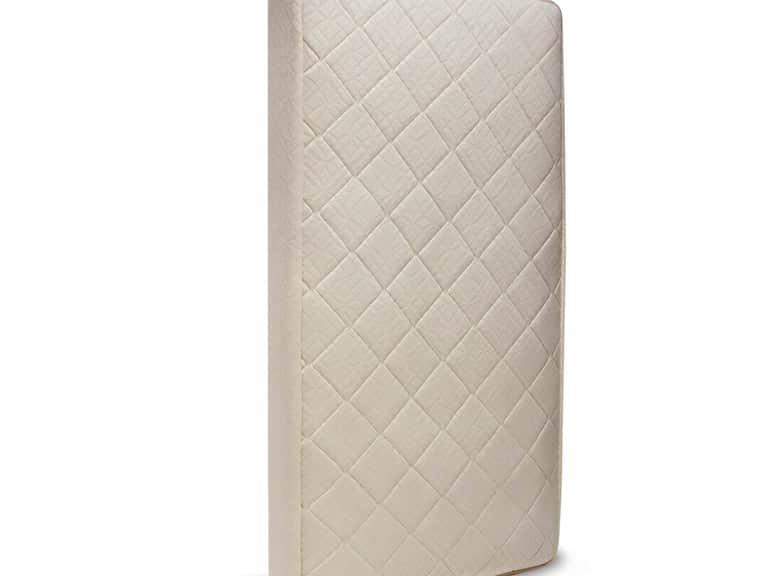
For instance, the Naturepedic Ultra Breathable 2-Stage Organic Crib Mattress is described as having a firm infant side and a second side intended for a later stage, with an integrated construction and a breathable pad. Anyone researching it should verify its current instructions, dimensions, age or developmental guidance, and compatibility with the crib and fitted sheet. The presence of a breathable feature does not replace safe-sleep practice, and a mattress should be used only as its manufacturer directs.
It is also worth distinguishing a mattress component from a separate bedding accessory. If a product includes a pad as part of its construction, caregivers should follow the instructions for that specific model rather than adding another pad of their own. Do not assume that an item marketed for comfort, moisture protection, or temperature management is appropriate for every infant, crib, or mattress combination.
Product descriptions are not the same as independent safety evaluations. Review the manufacturer’s documentation and applicable standards, and check that the product is intended for the child’s age and sleep setting. If a claim is unclear—especially one involving layers, mattress orientation, or cleaning—ask the manufacturer or a pediatric professional before use.
Common misunderstandings about organic crib bedding
“Organic” means the whole product is certified
Not necessarily. A claim may refer to one fiber or component. Look for a complete materials breakdown and the name and scope of any certification.
A natural fiber makes a soft crib surface safer
Fiber origin does not determine whether a surface is suitable for infant sleep. The sleep surface should be firm, flat, and level, with only a fitted sheet.
A breathable claim means extra bedding is acceptable
No material claim makes loose blankets, pillows, toys, or padding appropriate additions to an infant’s sleep space. Keep the crib clear.
A waterproof layer can be improvised at home
Do not use towels, plastic sheets, or unrelated protectors as makeshift layers. Use only products that are explicitly designed for the mattress and consistent with its instructions and safe-sleep guidance.
More layers mean more comfort
For infant sleep, extra layers can create hazards rather than improve the setup. Comfort should not be pursued by adding unapproved bedding or changing the firmness of the surface.
A practical checklist for caregivers
Before a new sheet or bedding item enters the nursery, pause for a short review. The checklist below is not a replacement for official guidance or product instructions, but it can help separate material preferences from essential safety decisions.
- Sleep surface: Is the mattress firm, flat, level, and intended for the crib or sleep product?
- Crib fit: Does the mattress fit the crib as specified, without concerning gaps?
- Sheet fit: Is the fitted sheet made for the mattress dimensions and securely held in place?
- Clear space: Is the crib free of pillows, blankets, quilts, toys, bumpers, positioners, and other loose objects?
- Materials: Does the label identify the fibers and components clearly?
- Certification: Is a certification named, and is its scope clear?
- Care: Can the product be washed as directed, and does it retain a secure fit afterward?
- Instructions: Do the crib, mattress, and bedding instructions agree about how the setup should be used?
- Changing needs: Have the crib and room been checked as the infant grows and the environment changes?
When to seek professional guidance
Safe-sleep recommendations are broad, but an infant’s medical circumstances can be specific. If a baby was born prematurely, has a health condition, uses medical equipment, or has a clinician-directed sleep plan, ask the care team how general guidance applies. Do not change the sleep position, mattress, or bedding arrangement based on informal advice or marketing claims.
Caregivers can also consult current guidance from recognized public-health organizations and product-safety authorities in their region. Standards and recommendations can be updated, so use recent official resources rather than relying on an old checklist, a social-media post, or a product page alone.
The quieter logic of a safe nursery
Organic crib bedding can be evaluated with careful questions: What materials are present? What does a certification actually cover? How should the item be washed? Will it fit securely? Those questions help families make informed choices according to their priorities, whether they value fiber sourcing, ease of care, durability, or simple comfort.
But the most important decision is not a fabric decision. It is the choice to keep the infant’s sleep space simple: a firm, flat, level surface, a correctly fitted sheet, and no additional objects. In that restrained landscape, labels and materials find their proper place—not as guarantees, but as details to understand after safety has set the boundaries.